Büroorganisation · Hünfelden & Offenbach
Office organization for administrative workflows
POT Falkenberg GmbH helps organizations structure records, filing and daily office processes so work runs smoothly and privacy obligations hold up in the real office. Büroorganisation and administrative Dienstleistungen, planned around the team you actually have.

Filing structure
Why filing structure matters more than it looks
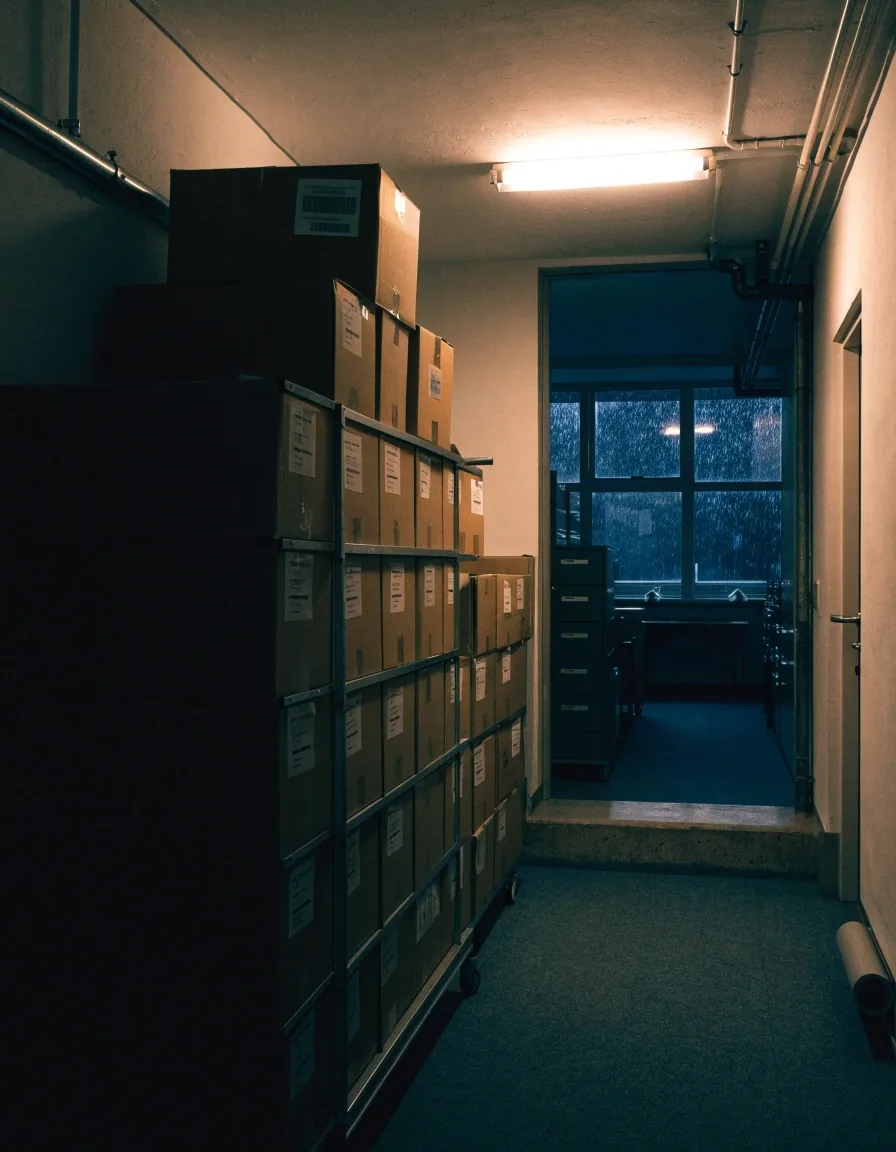
Büroorganisation rarely gets attention until something breaks: a contract cannot be found, an applicant file should have been deleted two years ago, three people keep separate versions of the same spreadsheet.
When documents have no naming rule and no clear home, two things happen. People waste time searching, and retention rules become impossible to apply because nobody can identify which files fall under which period. A structure that works is boring: predictable names, defined locations, a short rule for where each document type goes. We build it around the way your team already works rather than importing a system nobody will follow. Adoption matters more than elegance.
Document lifecycle
From arrival to deletion
Every document has a life: it arrives, gets processed, gets filed, stays for a defined period, and is deleted. Most organizations handle the first three steps and improvise the last two.
We map the lifecycle for your main document categories and connect each one to a retention period. That connection is what turns a Löschkonzept from a document into something your team can execute. The map also shows where digital and paper records overlap, which is often messier than expected.
- Arrival Incoming post, email attachments and portal downloads land in one defined intake point instead of three personal inboxes.
- Processing The step where a document is read, answered or approved — and where duplicated typing usually creeps in.
- Filing A naming rule and a defined home per document type, so the file can be found by anyone, not only by the person who saved it.
- Retention Each category is tied to a period, so the office knows what has to stay and for how long before anything is considered for deletion.
- Deletion The step most offices improvise. Scheduled, documented and assigned to a person, it stops being a yearly panic.
Process review
Administrative workflows worth reviewing
Some processes cause recurring friction. Incoming invoice handling, applicant management, contract filing, correspondence with authorities. We review how each one actually runs, not how it is supposed to run, and identify where steps duplicate, where approvals stall, and where information gets retyped instead of reused.
Improvements tend to be small and specific: a shared intake point, a consistent file naming convention, a checklist for a process that currently lives in one person's memory. Small changes that hold beat grand reorganizations that do not.

Where friction usually shows up
Invoice post that arrives in three places, applicant documents kept after the process ended, contracts filed by year only, authority letters answered from memory. None of these are dramatic; all of them cost hours every month.
What a review produces
A short written picture of how each process runs today, the duplicated and stalled steps marked, and a ranked list of changes with an owner per item. We keep the list short enough that a normal working week can absorb it.
Records & archive
Records and archives
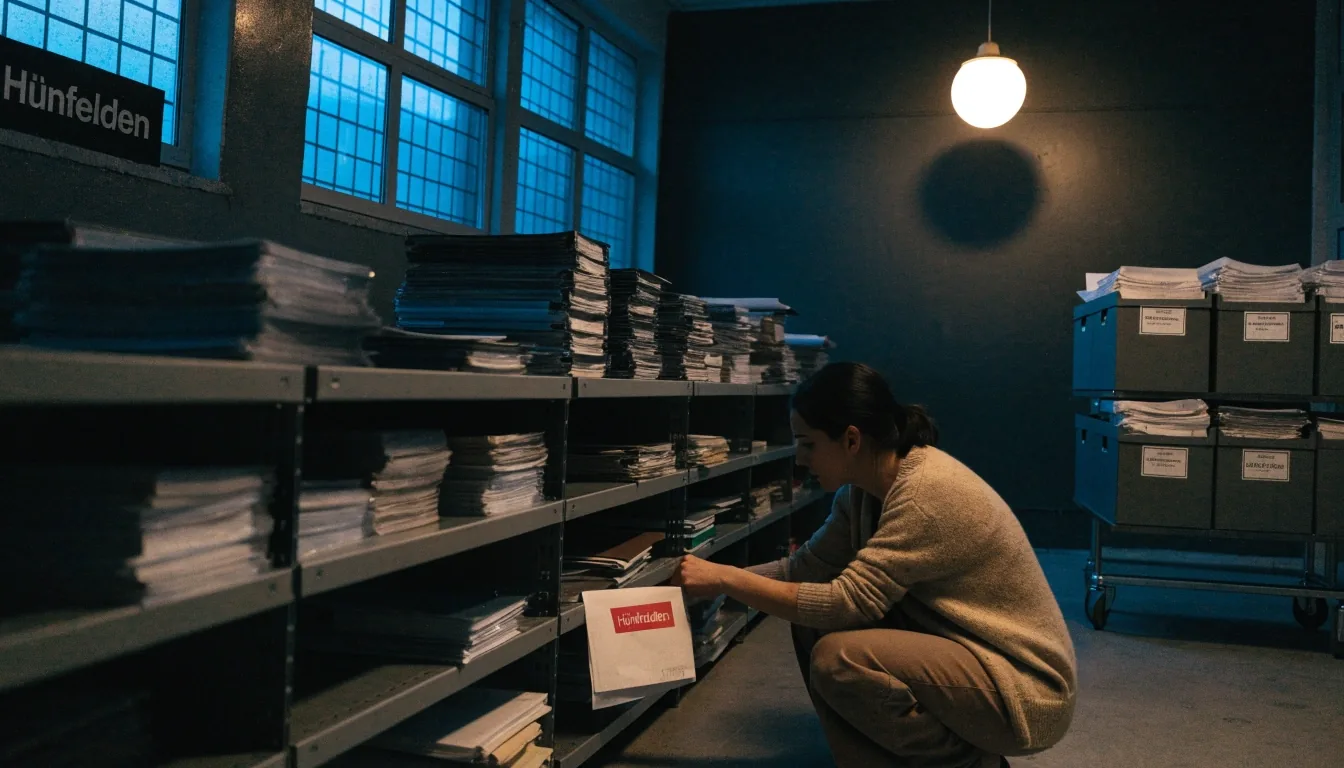
At some point active files become archived records. The transition needs a rule, or things sit in the active filing forever. We define when a document moves to archive, where the archive lives, and who can access it.
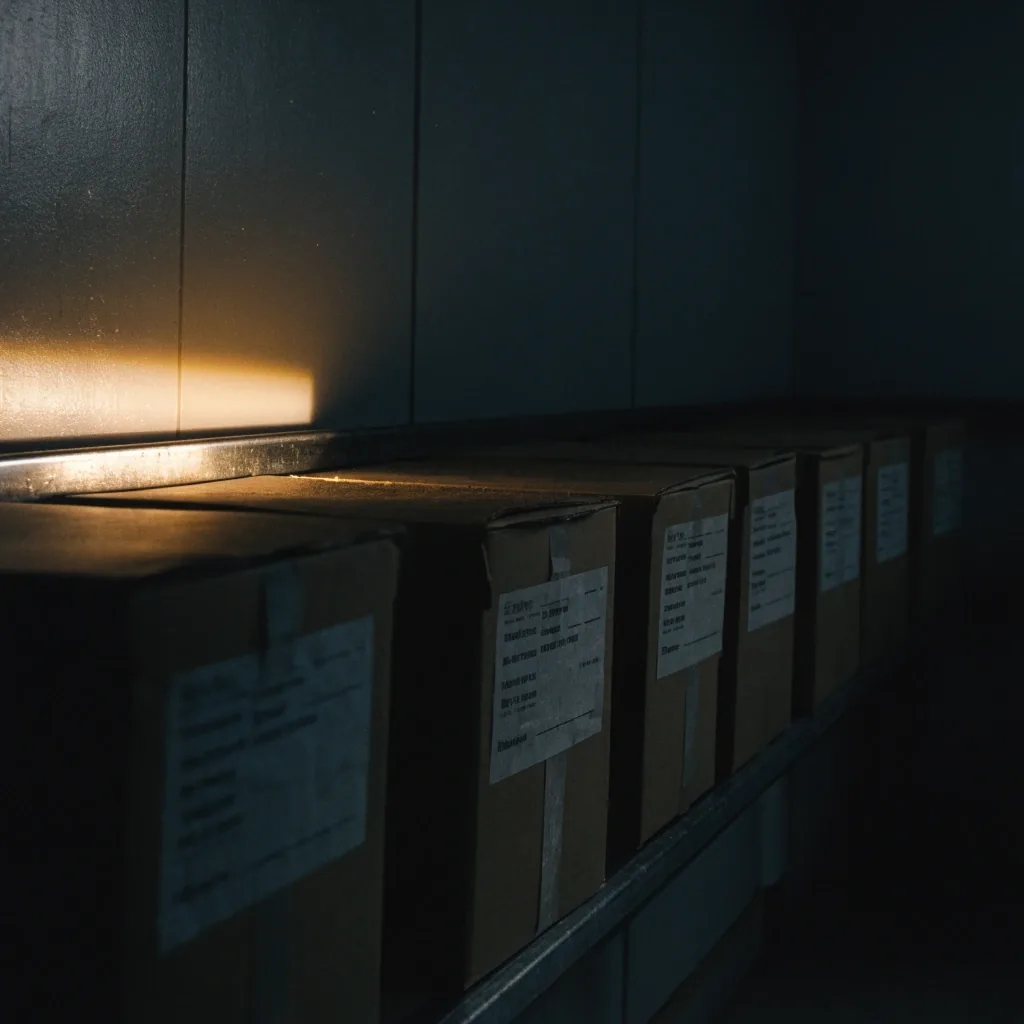
For paper archives, this includes physical organization: labeled boxes, an index, a defined retention schedule. For digital archives, it means folder structures and access permissions that match the retention logic. The archive is also where deletion gets scheduled, so it cannot be an afterthought.
Paper archive
Boxes with a readable index, a shelf rule that matches the retention schedule, and one person responsible for keeping both in step.
Digital archive
Folder logic and permissions that mirror the retention rule, so archived material is readable to the right roles and closed to everyone else.
Access & permissions
Access and permissions in practice
Who may open which files is both an organizational and a privacy question. In many offices, shared drives have grown permissions over years until nearly everyone can reach nearly everything. We review access by role, reduce it to what each position actually needs, and document the logic so it can be maintained when staff change.
For personnel files and similar sensitive records, this usually means a separate area with restricted access and a clear rule about who manages it. The same review feeds directly into your technische und organisatorische Maßnahmen.
One rule per role
What a position needs, written down, so a new starter inherits the same access rather than a copy of the colleague's folder.
Sensitive records apart
Personnel and comparable files live in their own area with restricted reach and one named owner.
Feeds the measure register
The result is usable in your Datenschutz documentation instead of a paragraph written once and forgotten.
Where IT meets filing
Where office organization meets IT
Filing structures live in systems. If documents sit on a shared drive, in an email archive and in a specialized application at the same time, no organizational rule will hold. Part of the work is deciding which system is the primary home for which document type, and then configuring the others accordingly.
This is where the IT side of the consultancy matters: we can change permissions, set up folder structures and adjust retention settings as part of the same engagement, instead of writing a concept that your systems cannot implement. Our Unternehmensberatung, IT-Beratung and IT-Schulungen work under one roof, so the filing rule and the system setting are agreed in the same conversation.
Getting a team to actually follow the structure
A new filing system fails when it is introduced by memo and never mentioned again. We help with the unglamorous part: a short written rule set, a training session for the people who file daily, and a review a few weeks later to catch what drifted.
Where a team member takes on the role of keeping the structure in shape, we make sure they know what to watch for. Organizations that maintain their structure do it because one person owns it, not because everyone remembers the memo.
- A rule set that fits on one page
- Naming pattern, where each document type goes, what gets archived and when. Short enough that a new colleague reads it once.
- A session for the people who file
- Hands-on with your own documents, not a slide deck about filing theory. Whoever files daily is the audience that matters.
- A follow-up a few weeks later
- We look at what drifted, fix the rule where it was unrealistic, and confirm the owner still has the time to keep it going.

Working with small teams and limited time
Our clients do not have an administration department with spare capacity. That shapes the approach: changes are introduced in small steps that fit alongside normal work, and every step has a clear owner. A first engagement might cover just the document categories causing the most friction, with the rest following later.
If your office is a two-person operation, the structure we build will look different from one designed for thirty people, and it should. We size the work to the organization, not to a template.
Warning register · retention & deletion
Retention periods and deletion deadlines are legal obligations, not filing preferences. If your document categories are not tied to a defined period, a Löschkonzept cannot be applied in practice — and an applicant file that should have been deleted two years ago is a live Datenschutz problem, not a tidiness one. This is the point where office organization and data protection stop being separate projects.
Discuss Your Filing StructureQuestions we hear
Practical answers before we start
Do you work with paper files as well as digital ones?
Yes. Many clients run a mix, and the retention logic has to cover both, including the archive.
Can you help if we have no filing rules at all?
That is a common starting point. We build the structure from your actual document types rather than a generic template.
How long before the new structure is in use?
For a small organization, a workable structure can be in place within a few weeks, with a follow-up review after the team has used it.
Start with the document categories causing the most friction
A first conversation can stay narrow: which files are hard to find, which processes stall, which records you are unsure how long to keep. From there we propose the smallest first step that fits your team. POT Falkenberg GmbH is led by Geschäftsführerin Waltraud Falkenberg and registered under HRB 6640.
Where to find us
-
Hünfelden
Nassauer Straße 5, 65597 Hünfelden, Germany
-
Offenbach branch
Kaiserstraße 29, 63065 Offenbach, Germany
-
Office hours
Monday to Friday, 9:00 AM – 6:00 PM
-
Direct contact